Go bag checklist: the essentials for each person
Updated October 20, 2026 · Based on Ready.gov and other public guidance
A go bag is a ready-packed bag each person can grab and carry on foot if your family needs to leave home quickly. The essentials: water, easy food, a flashlight, a radio, a first aid kit, a 7-day supply of medicines, copies of key documents, cash, phone chargers, a change of clothes and a printed list of family contacts. Pack one per person, plus supplies for each pet.
Go bag or home kit?
The two work together. The American Red Cross suggests a 3-day supply of water and food for evacuation and a 2-week supply for home. The go bag is the light, carry-it-on-foot version, as Ready.gov puts it. The home kit stays in the closet for staying put, and a small car kit covers the road.
The go bag checklist: essentials
These come from the Red Cross survival kit list and Ready.gov's basic kit:
- Water (the Red Cross guide: one gallon per person per day, 3-day supply for evacuation)
- Non-perishable, easy-to-prepare food
- Flashlight and extra batteries
- Battery-powered or hand-crank radio
- First aid kit
- Medicines (7-day supply) and medical items
- Multi-purpose tool
- Sanitation and personal hygiene items
- Copies of personal documents: medication list, proof of address, deed or lease, passports, birth certificates, insurance policies
- Cell phone with chargers and a backup battery
- Family and emergency contact information, on paper
- Extra cash
- Emergency blanket
- Map of the area
- Whistle and a mask
- A change of clothes and sturdy shoes
- Extra set of car keys and house keys
Add-ons for each person
Kids
- A small game, book or activity
- Snacks they will actually eat
- A card with parents' phone numbers and the meeting place
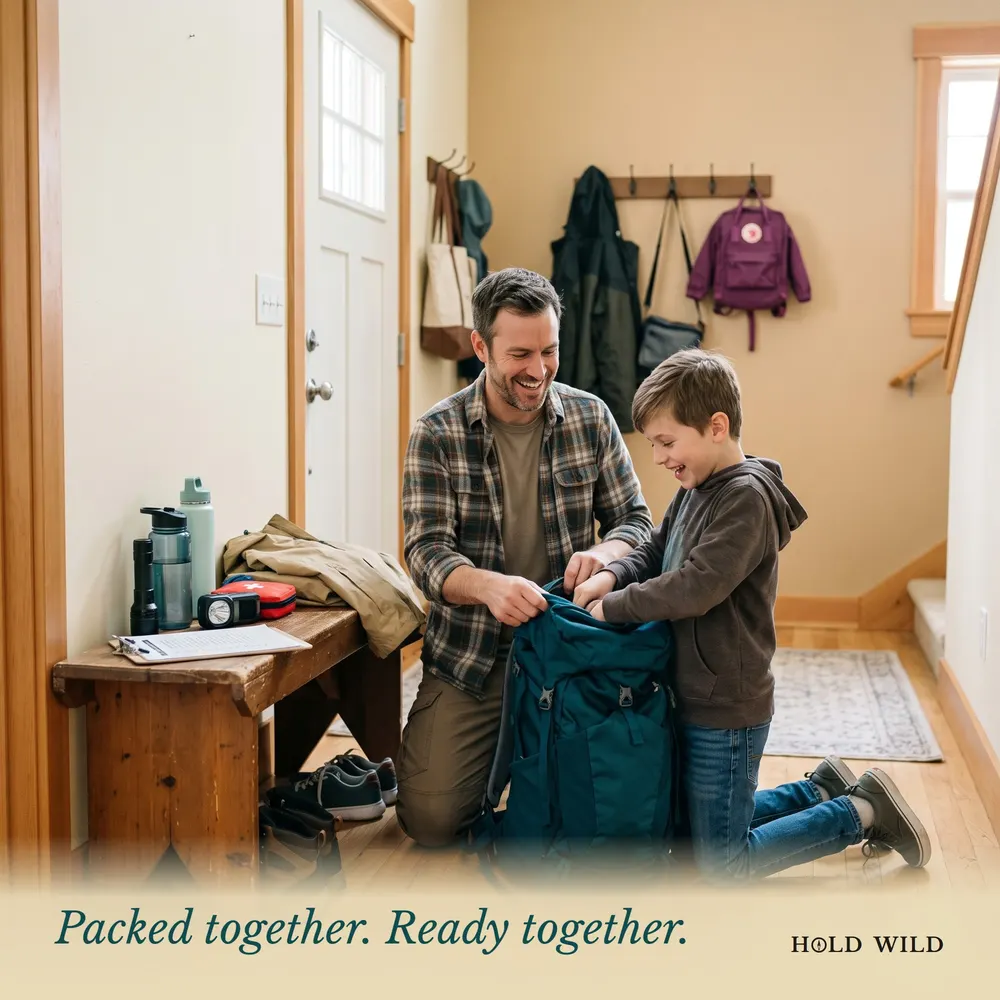
Let children pack their own bag with you. They learn what is in it, and it becomes theirs.
Babies
- Bottles and formula
- Baby food
- Diapers and wipes
Medical needs
- Glasses, contact lenses and solution
- Hearing aids with extra batteries
- Medical supplies such as syringes
Pets
- Collar, leash and ID
- Food, water and a bowl
- Carrier
- Vaccination records
Ready.gov notes that most public shelters allow only service animals, so it helps to find a pet-friendly place to stay ahead of time.
Where to keep go bags
Ready.gov's advice: everyone in the household should know where the bags are and who is responsible for each one. Near the door you use most is a good spot. If you have a car, keep a small kit there too, and keep the tank at least half full.
Packing tips
Ready.gov suggests storing kit items in airtight plastic bags inside one or two easy-to-carry containers. For a go bag that means a sturdy backpack, with food, medicines and document copies each in their own sealed bag. Put the heaviest items close to the back, and check that each person can actually lift and carry their own bag.
A grab list by warning time
Sometimes there is an hour, sometimes a few minutes. Writing it down in advance takes the deciding out of the moment:
- 5 minutes: people, pets, go bags, phones, medicines
- 15 minutes: add the emergency binder or document copies, chargers, glasses
- 60 minutes: add laptops, extra clothes and food, and leave a note saying where you went
Documents go faster when copies already sit in one folder. The important documents checklist shows which ones.
Refresh twice a year
Ready.gov suggests replacing expired items and rethinking your needs every year. A short twice-a-year check catches most changes: food and water dates, medicines, kids' clothing sizes, batteries and phone numbers. Pair it with a quick family drill from your family emergency plan.
The car deserves its own small kit too. The car emergency kit checklist lists what to keep in the trunk all year, and what to add for winter.
Questions families ask
What should be included in a go bag?
Water, easy food, a flashlight, a radio, extra batteries, a first aid kit, a 7-day supply of medicines, a multi-tool, hygiene items, copies of key documents, phone chargers, contact information on paper, cash, an emergency blanket, a map and a change of clothes.
How much water should be in a go bag?
The American Red Cross guide is one gallon per person per day, with a 3-day supply for evacuation. Since water is heavy, many families split it between the go bags and the car.
How much cash should I keep in my go bag?
Neither Ready.gov nor the Red Cross names an amount. Small bills are easiest to use. Pick an amount your household is comfortable keeping and note it on your checklist.
What is the difference between a go bag and an emergency kit?
A go bag is portable, made to carry on foot when you leave. An emergency kit at home holds larger supplies for staying put, such as the Red Cross 2-week supply.
Should kids have their own go bag?
A small bag per child works well: a few clothes, snacks, a comfort activity and a card with family phone numbers. Adults carry the heavier water and supplies.
This guide is general information to help you get organized. It is not medical, legal or financial advice. In an emergency, call 911 and follow the instructions of local officials.
Sources (opened October 18, 2026):