Emergency binder checklist: what to put in yours
Updated October 18, 2026 · Based on Ready.gov and other public guidance
An emergency binder is one folder that holds what your family would need to find fast: contacts, medical information, copies of key documents, insurance and account details, and your family emergency plan. Start with a contacts page and a medical page, add document copies next, and finish with the plan. Most households can fill the core of it over one weekend.
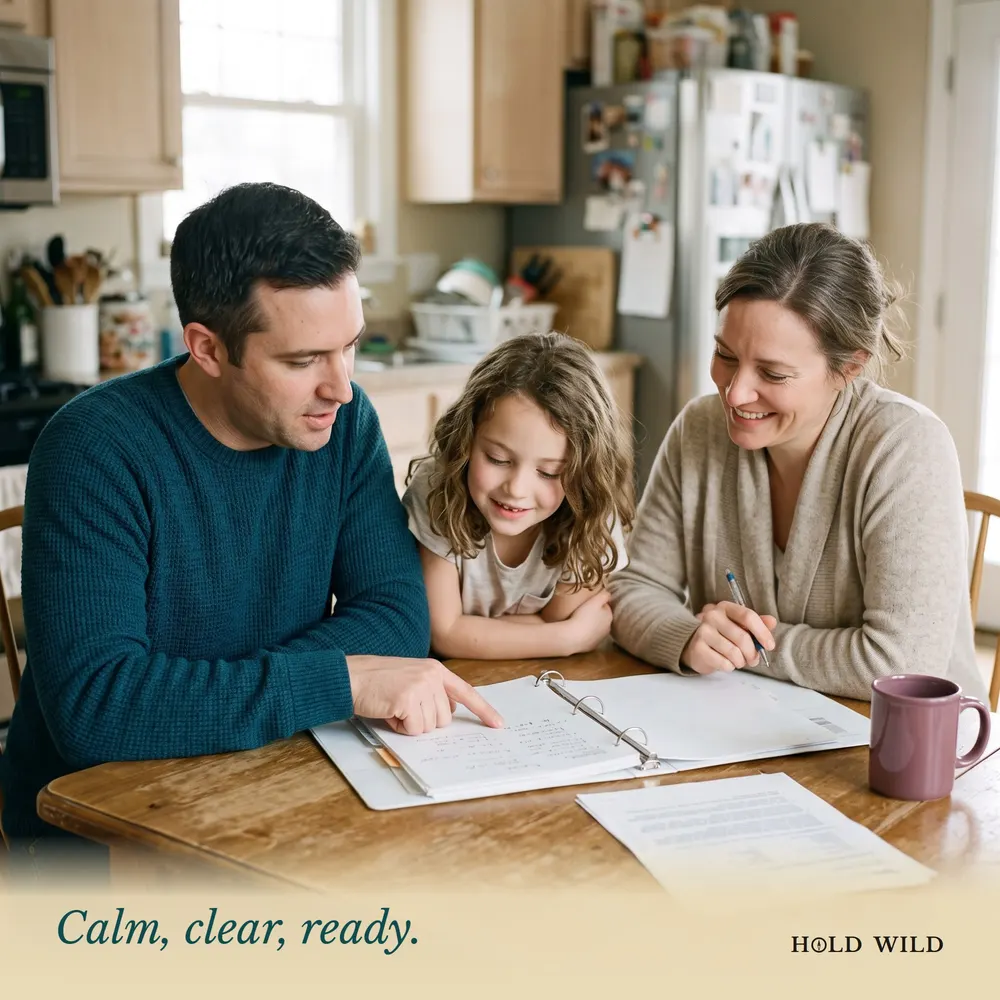
What an emergency binder is, and what it is not
You may also see it called an in case of emergency binder, a what if binder or a family binder. The idea is the same: one place, in plain language, where a spouse, a grown child or a caregiver can find the facts that usually live in one person's head.
Many binders stop at paperwork. A more useful one adds the family plan too: where to meet, how to leave, what to grab and who to call. That way the binder helps on an ordinary Tuesday (a lost card, a doctor's form) and on the day plans change fast.
It is an organizing tool. It does not replace a will, an attorney, a doctor or a financial advisor, and it does not need to be perfect to be useful.
The emergency binder checklist, section by section
Fill the sections in this order. The first three are the ones people reach for most often.
1. Household at a glance
- Names and birthdays of everyone in the home
- Home address and the nearest cross streets
- Where the binder, the go bags and the spare keys are kept
- A one-page summary that can go on the fridge
2. Contacts
- An out-of-area contact everyone can reach
- Doctors, dentist and pharmacy
- School, daycare and work numbers
- Neighbors you trust
- Insurance agents, bank and utility companies
3. Medical
- A medication list for each person (name, dose, prescriber)
- Allergies and conditions
- Copies of health insurance cards
- Immunization records
4. Copies of key documents
- Photo IDs, birth certificates and Social Security cards
- Passports
- Proof of address and the deed or lease to your home
- Insurance policies
- Military service records, if any
Ready.gov and the American Red Cross both list documents like these as the ones to gather. The important documents checklist goes deeper on where each original should live.
5. Money and bills
- Bank and card accounts (last 4 digits only)
- Loans and mortgage
- Monthly bills, and which ones are on autopay
- Where tax statements are kept
6. Home and vehicles
- Where the water, gas and electric shut-offs are
- Service providers (plumber, electrician, internet)
- Vehicle details and roadside assistance
7. Digital accounts
- A list of key accounts and the email each one recovers to
- Where the password manager or account log is kept
- What the family should do with each account
The password tracker guide covers how to record accounts without putting passwords at risk.
8. Pets
- Vet contact and vaccination records
- ID tag or microchip number
- Food, medicine and a photo of each pet
9. The family emergency plan
- Meeting places near home and outside the neighborhood
- Two ways out of the neighborhood
- Who picks up the kids
- Where the go bags are
The family emergency plan guide walks through this section step by step.
How to fill it in one weekend
- Saturday morning: household page and contacts. Phone contacts are the fastest win.
- Saturday afternoon: one medical page per person. Read labels off the actual medicine bottles.
- Sunday morning: gather the originals, make copies, and note where each original lives.
- Sunday afternoon: sit down together for the family plan. Twenty minutes is enough for a first version.
- Before you close it: write two review dates on the inside cover.
Where to keep an emergency binder
Keep the binder in one spot every adult in the home knows, close to where the go bags live. Ready.gov suggests storing important documents in a safety deposit box, on an external drive or in the cloud, so the binder works best with copies, while originals stay somewhere safer.
For privacy, write only the last 4 digits of account and card numbers, and use hints instead of passwords.
Keeping it current
Ready.gov's advice for emergency kits fits binders too: rethink your needs every year and update as your family changes. Many families pick two dates they already remember, such as the start of spring and fall, and spend half an hour on new medicines, new phone numbers and renewed policies.
Questions families ask
What should be in an emergency binder?
Contacts, a medical page for each person, copies of key documents (IDs, birth certificates, insurance policies, proof of address), money and bill details, home shut-offs, a list of digital accounts, pet records and your family emergency plan.
What is the difference between an emergency binder and a what if binder?
Mostly the name. A what if binder usually focuses on information the family would need if someone could not speak for themselves. An emergency binder often adds the practical plan: meeting places, routes and go bags. A good one does both.
Should I put original documents in my emergency binder?
Most families keep copies in the binder and store originals somewhere safer. Ready.gov suggests a safety deposit box, an external drive or the cloud for important documents.
How often should I update an emergency binder?
Ready.gov suggests rethinking your emergency needs every year. Many families do a short review twice a year, for example at the start of spring and fall.
Is it safe to keep account details in a binder?
Write only what your family needs: the last 4 digits of account numbers, the bank name and a phone number. Use hints instead of passwords, and keep the binder in a place only your household knows.
This guide is general information to help you get organized. It is not medical, legal or financial advice. In an emergency, call 911 and follow the instructions of local officials.
Sources (opened October 18, 2026):